 |
SyterKit 0.4.0.x
SyterKit is a bare-metal framework
|
Loading...
Searching...
No Matches
|
SyterKit 0.4.0.x
SyterKit is a bare-metal framework
|
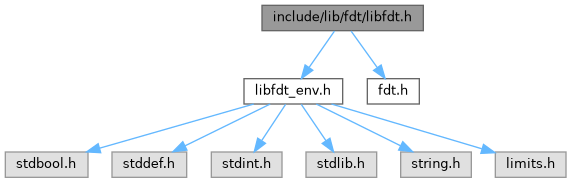

Go to the source code of this file.
Macros | |
| #define | FDT_FIRST_SUPPORTED_VERSION 0x02 |
| #define | FDT_LAST_COMPATIBLE_VERSION 0x10 |
| #define | FDT_LAST_SUPPORTED_VERSION 0x11 |
| #define | FDT_ERR_NOTFOUND 1 |
| #define | FDT_ERR_EXISTS 2 |
| #define | FDT_ERR_NOSPACE 3 |
| #define | FDT_ERR_BADOFFSET 4 |
| #define | FDT_ERR_BADPATH 5 |
| #define | FDT_ERR_BADPHANDLE 6 |
| #define | FDT_ERR_BADSTATE 7 |
| #define | FDT_ERR_TRUNCATED 8 |
| #define | FDT_ERR_BADMAGIC 9 |
| #define | FDT_ERR_BADVERSION 10 |
| #define | FDT_ERR_BADSTRUCTURE 11 |
| #define | FDT_ERR_BADLAYOUT 12 |
| #define | FDT_ERR_INTERNAL 13 |
| #define | FDT_ERR_BADNCELLS 14 |
| #define | FDT_ERR_BADVALUE 15 |
| #define | FDT_ERR_BADOVERLAY 16 |
| #define | FDT_ERR_NOPHANDLES 17 |
| #define | FDT_ERR_BADFLAGS 18 |
| #define | FDT_ERR_ALIGNMENT 19 |
| #define | FDT_ERR_MAX 19 |
| #define | FDT_MAX_PHANDLE 0xfffffffe |
| #define | fdt_for_each_subnode(node, fdt, parent) for (node = fdt_first_subnode(fdt, parent); node >= 0; node = fdt_next_subnode(fdt, node)) |
| fdt_for_each_subnode - iterate over all subnodes of a parent | |
| #define | fdt_get_header(fdt, field) (fdt32_ld(&((const struct fdt_header *) (fdt))->field)) |
| #define | fdt_magic(fdt) (fdt_get_header(fdt, magic)) |
| #define | fdt_totalsize(fdt) (fdt_get_header(fdt, totalsize)) |
| #define | fdt_off_dt_struct(fdt) (fdt_get_header(fdt, off_dt_struct)) |
| #define | fdt_off_dt_strings(fdt) (fdt_get_header(fdt, off_dt_strings)) |
| #define | fdt_off_mem_rsvmap(fdt) (fdt_get_header(fdt, off_mem_rsvmap)) |
| #define | fdt_version(fdt) (fdt_get_header(fdt, version)) |
| #define | fdt_last_comp_version(fdt) (fdt_get_header(fdt, last_comp_version)) |
| #define | fdt_boot_cpuid_phys(fdt) (fdt_get_header(fdt, boot_cpuid_phys)) |
| #define | fdt_size_dt_strings(fdt) (fdt_get_header(fdt, size_dt_strings)) |
| #define | fdt_size_dt_struct(fdt) (fdt_get_header(fdt, size_dt_struct)) |
| #define | fdt_set_hdr_(name) |
Functions | |
| const void * | fdt_offset_ptr (const void *fdt, int offset, unsigned int checklen) |
| static void * | fdt_offset_ptr_w (void *fdt, int offset, int checklen) |
| uint32_t | fdt_next_tag (const void *fdt, int offset, int *nextoffset) |
| static uint16_t | fdt16_ld (const fdt16_t *p) |
| static uint32_t | fdt32_ld (const fdt32_t *p) |
| static void | fdt32_st (void *property, uint32_t value) |
| static uint64_t | fdt64_ld (const fdt64_t *p) |
| static void | fdt64_st (void *property, uint64_t value) |
| int | fdt_next_node (const void *fdt, int offset, int *depth) |
| int | fdt_first_subnode (const void *fdt, int offset) |
| fdt_first_subnode() - get offset of first direct subnode @fdt: FDT blob @offset: Offset of node to check | |
| int | fdt_next_subnode (const void *fdt, int offset) |
| fdt_next_subnode() - get offset of next direct subnode @fdt: FDT blob @offset: Offset of previous subnode | |
| fdt_set_hdr_ (magic) | |
| fdt_set_hdr_ (totalsize) | |
| fdt_set_hdr_ (off_dt_struct) | |
| fdt_set_hdr_ (off_dt_strings) | |
| fdt_set_hdr_ (off_mem_rsvmap) | |
| fdt_set_hdr_ (version) | |
| fdt_set_hdr_ (last_comp_version) | |
| fdt_set_hdr_ (boot_cpuid_phys) | |
| fdt_set_hdr_ (size_dt_strings) | |
| fdt_set_hdr_ (size_dt_struct) | |
| size_t | fdt_header_size (const void *fdt) |
| fdt_header_size - return the size of the tree's header @fdt: pointer to a flattened device tree | |
| size_t | fdt_header_size_ (uint32_t version) |
| fdt_header_size_ - internal function to get header size from a version number | |
| int | fdt_check_header (const void *fdt) |
| fdt_check_header - sanity check a device tree header @fdt: pointer to data which might be a flattened device tree | |
| int | fdt_move (const void *fdt, void *buf, int bufsize) |
| fdt_move - move a device tree around in memory @fdt: pointer to the device tree to move @buf: pointer to memory where the device is to be moved @bufsize: size of the memory space at buf | |
| int | fdt_check_full (const void *fdt, size_t bufsize) |
| const char * | fdt_get_string (const void *fdt, int stroffset, int *lenp) |
| fdt_get_string - retrieve a string from the strings block of a device tree @fdt: pointer to the device tree blob @stroffset: offset of the string within the strings block (native endian) @lenp: optional pointer to return the string's length | |
| const char * | fdt_string (const void *fdt, int stroffset) |
| fdt_string - retrieve a string from the strings block of a device tree @fdt: pointer to the device tree blob @stroffset: offset of the string within the strings block (native endian) | |
| int | fdt_find_max_phandle (const void *fdt, uint32_t *phandle) |
| fdt_find_max_phandle - find and return the highest phandle in a tree @fdt: pointer to the device tree blob @phandle: return location for the highest phandle value found in the tree | |
| static uint32_t | fdt_get_max_phandle (const void *fdt) |
| fdt_get_max_phandle - retrieves the highest phandle in a tree @fdt: pointer to the device tree blob | |
| int | fdt_generate_phandle (const void *fdt, uint32_t *phandle) |
| fdt_generate_phandle - return a new, unused phandle for a device tree blob @fdt: pointer to the device tree blob @phandle: return location for the new phandle | |
| int | fdt_num_mem_rsv (const void *fdt) |
| fdt_num_mem_rsv - retrieve the number of memory reserve map entries @fdt: pointer to the device tree blob | |
| int | fdt_get_mem_rsv (const void *fdt, int n, uint64_t *address, uint64_t *size) |
| fdt_get_mem_rsv - retrieve one memory reserve map entry @fdt: pointer to the device tree blob : index of reserve map entry @address: pointer to 64-bit variable to hold the start address @size: pointer to 64-bit variable to hold the size of the entry | |
: name of the property to find | |
fdt_getprop - retrieve the value of a given property @fdt: pointer to the device tree blob @nodeoffset: offset of the node whose property to find @lenp: pointer to an integer variable (will be overwritten) or NULL fdt_getprop() retrieves a pointer to the value of the property named | |
| const struct fdt_property * | fdt_get_property_namelen (const void *fdt, int nodeoffset, const char *name, int namelen, int *lenp) |
| const struct fdt_property * | fdt_get_property (const void *fdt, int nodeoffset, const char *name, int *lenp) |
| static struct fdt_property * | fdt_get_property_w (void *fdt, int nodeoffset, const char *name, int *lenp) |
| const void * | fdt_getprop_by_offset (const void *fdt, int offset, const char **namep, int *lenp) |
| fdt_getprop_by_offset - retrieve the value of a property at a given offset @fdt: pointer to the device tree blob @offset: offset of the property to read @namep: pointer to a string variable (will be overwritten) or NULL @lenp: pointer to an integer variable (will be overwritten) or NULL | |
| const void * | fdt_getprop_namelen (const void *fdt, int nodeoffset, const char *name, int namelen, int *lenp) |
| static void * | fdt_getprop_namelen_w (void *fdt, int nodeoffset, const char *name, int namelen, int *lenp) |
of the node at offset @nodeoffset (this will be a | |
pointer to within the device blob itself, not a copy of the value). If @lenp is non-NULL, the length of the property value is also returned, in the integer pointed to by @lenp. returns: pointer to the property's value if lenp is non-NULL, *lenp contains the length of the property value (>=0) NULL, on error if lenp is non-NULL, *lenp contains an error code (<0): -FDT_ERR_NOTFOUND, node does not have named property -FDT_ERR_BADOFFSET, nodeoffset did not point to FDT_BEGIN_NODE tag -FDT_ERR_BADMAGIC, -FDT_ERR_BADVERSION, -FDT_ERR_BADSTATE, -FDT_ERR_BADSTRUCTURE, -FDT_ERR_TRUNCATED, standard meanings | |
| const void * | fdt_getprop (const void *fdt, int nodeoffset, const char *name, int *lenp) |
| static void * | fdt_getprop_w (void *fdt, int nodeoffset, const char *name, int *lenp) |
| uint32_t | fdt_get_phandle (const void *fdt, int nodeoffset) |
| fdt_get_phandle - retrieve the phandle of a given node @fdt: pointer to the device tree blob @nodeoffset: structure block offset of the node | |
, if it exists, | |
NULL otherwise | |
| const char * | fdt_get_alias_namelen (const void *fdt, const char *name, int namelen) |
: name of the property to change the value of | |
fdt_setprop_inplace_cell - change the value of a single-cell property @fdt: pointer to the device tree blob @nodeoffset: offset of the node containing the property @val: new value of the 32-bit cell This is an alternative name for fdt_setprop_inplace_u32() Return: 0 on success, negative libfdt error number otherwise. | |
| static int | fdt_setprop_inplace_cell (void *fdt, int nodeoffset, const char *name, uint32_t val) |
: name to give the node | |
fdt_set_name - change the name of a given node @fdt: pointer to the device tree blob @nodeoffset: structure block offset of a node fdt_set_name() replaces the name (including unit address, if any) of the given node with the given string. NOTE: this function can't efficiently check if the new name is unique amongst the given node's siblings; results are undefined if this function is invoked with a name equal to one of the given node's siblings. This function may insert or delete data from the blob, and will therefore change the offsets of some existing nodes. returns: 0, on success -FDT_ERR_NOSPACE, there is insufficient free space in the blob to contain the new name -FDT_ERR_BADOFFSET, nodeoffset did not point to FDT_BEGIN_NODE tag -FDT_ERR_BADMAGIC, -FDT_ERR_BADVERSION, -FDT_ERR_BADSTATE, standard meanings | |
| int | fdt_set_name (void *fdt, int nodeoffset, const char *name) |
: name of the property to append to | |
fdt_appendprop - append to or create a property @fdt: pointer to the device tree blob @nodeoffset: offset of the node whose property to change @val: pointer to data to append to the property value @len: length of the data to append to the property value fdt_appendprop() appends the value to the named property in the given node, creating the property if it does not already exist. This function may insert data into the blob, and will therefore change the offsets of some existing nodes. returns: 0, on success -FDT_ERR_NOSPACE, there is insufficient free space in the blob to contain the new property value -FDT_ERR_BADOFFSET, nodeoffset did not point to FDT_BEGIN_NODE tag -FDT_ERR_BADLAYOUT, -FDT_ERR_BADMAGIC, -FDT_ERR_BADVERSION, -FDT_ERR_BADSTATE, -FDT_ERR_BADSTRUCTURE, -FDT_ERR_BADLAYOUT, -FDT_ERR_TRUNCATED, standard meanings | |
| int | fdt_appendprop (void *fdt, int nodeoffset, const char *name, const void *val, int len) |
: name of property | |
fdt_appendprop_addrrange - append a address range property @fdt: pointer to the device tree blob @parent: offset of the parent node @nodeoffset: offset of the node to add a property at @addr: start address of a given range @size: size of a given range fdt_appendprop_addrrange() appends an address range value (start address and size) to the value of the named property in the given node, or creates a new property with that value if it does not already exist. If "name" is not specified, a default "reg" is used. Cell sizes are determined by parent's #address-cells and #size-cells. This function may insert data into the blob, and will therefore change the offsets of some existing nodes. returns: 0, on success -FDT_ERR_BADLAYOUT, -FDT_ERR_BADMAGIC, -FDT_ERR_BADNCELLS, if the node has a badly formatted or invalid #address-cells property -FDT_ERR_BADOFFSET, nodeoffset did not point to FDT_BEGIN_NODE tag -FDT_ERR_BADSTATE, -FDT_ERR_BADSTRUCTURE, -FDT_ERR_BADVERSION, -FDT_ERR_BADVALUE, addr or size doesn't fit to respective cells size -FDT_ERR_NOSPACE, there is insufficient free space in the blob to contain a new property -FDT_ERR_TRUNCATED, standard meanings | |
| int | fdt_appendprop_addrrange (void *fdt, int parent, int nodeoffset, const char *name, uint64_t addr, uint64_t size) |
as the name of the new node. This is useful for | |
creating subnodes based on a portion of a larger string, such as a full path. Return: structure block offset of the created subnode (>=0), negative libfdt error value otherwise | |
| int | fdt_add_subnode_namelen (void *fdt, int parentoffset, const char *name, int namelen) |
: name of the subnode to locate | |
fdt_add_subnode - creates a new node @fdt: pointer to the device tree blob @parentoffset: structure block offset of a node fdt_add_subnode() creates a new node as a subnode of the node at structure block offset parentoffset, with the given name (which should include the unit address, if any). This function will insert data into the blob, and will therefore change the offsets of some existing nodes. returns: structure block offset of the created nodeequested subnode (>=0), on success -FDT_ERR_NOTFOUND, if the requested subnode does not exist -FDT_ERR_BADOFFSET, if parentoffset did not point to an FDT_BEGIN_NODE tag -FDT_ERR_EXISTS, if the node at parentoffset already has a subnode of the given name -FDT_ERR_NOSPACE, if there is insufficient free space in the blob to contain the new node -FDT_ERR_NOSPACE -FDT_ERR_BADLAYOUT -FDT_ERR_BADMAGIC, -FDT_ERR_BADVERSION, -FDT_ERR_BADSTATE, -FDT_ERR_BADSTRUCTURE, -FDT_ERR_TRUNCATED, standard meanings. | |
| #define | fdt_for_each_property_offset(property, fdt, node) for (property = fdt_first_property_offset(fdt, node); property >= 0; property = fdt_next_property_offset(fdt, property)) |
| int | fdt_subnode_offset_namelen (const void *fdt, int parentoffset, const char *name, int namelen) |
| int | fdt_subnode_offset (const void *fdt, int parentoffset, const char *name) |
| int | fdt_path_offset_namelen (const void *fdt, const char *path, int namelen) |
| fdt_path_offset_namelen - find a tree node by its full path @fdt: pointer to the device tree blob @path: full path of the node to locate @namelen: number of characters of path to consider | |
| int | fdt_path_offset (const void *fdt, const char *path) |
| fdt_path_offset - find a tree node by its full path @fdt: pointer to the device tree blob @path: full path of the node to locate | |
| const char * | fdt_get_name (const void *fdt, int nodeoffset, int *lenp) |
| fdt_get_name - retrieve the name of a given node @fdt: pointer to the device tree blob @nodeoffset: structure block offset of the starting node @lenp: pointer to an integer variable (will be overwritten) or NULL | |
| int | fdt_first_property_offset (const void *fdt, int nodeoffset) |
| fdt_first_property_offset - find the offset of a node's first property @fdt: pointer to the device tree blob @nodeoffset: structure block offset of a node | |
| int | fdt_next_property_offset (const void *fdt, int offset) |
| fdt_next_property_offset - step through a node's properties @fdt: pointer to the device tree blob @offset: structure block offset of a property | |
| const struct fdt_property * | fdt_get_property_by_offset (const void *fdt, int offset, int *lenp) |
| fdt_get_property_by_offset - retrieve the property at a given offset @fdt: pointer to the device tree blob @offset: offset of the property to retrieve @lenp: pointer to an integer variable (will be overwritten) or NULL | |
| int | fdt_add_subnode (void *fdt, int parentoffset, const char *name) |
| int | fdt_del_node (void *fdt, int nodeoffset) |
| fdt_del_node - delete a node (subtree) @fdt: pointer to the device tree blob @nodeoffset: offset of the node to nop | |
| int | fdt_overlay_apply (void *fdt, void *fdto) |
| fdt_overlay_apply - Applies a DT overlay on a base DT @fdt: pointer to the base device tree blob @fdto: pointer to the device tree overlay blob | |
| const char * | fdt_strerror (int errval) |
in the node /aliases. | |
returns: a pointer to the expansion of the alias named 'name', if it exists NULL, if the given alias or the /aliases node does not exist | |
| #define | FDT_MAX_NCELLS 4 |
| FDT_MAX_NCELLS - maximum value for #address-cells and #size-cells. | |
| const char * | fdt_get_alias (const void *fdt, const char *name) |
| int | fdt_get_path (const void *fdt, int nodeoffset, char *buf, int buflen) |
| fdt_get_path - determine the full path of a node @fdt: pointer to the device tree blob @nodeoffset: offset of the node whose path to find @buf: character buffer to contain the returned path (will be overwritten) @buflen: size of the character buffer at buf | |
| int | fdt_supernode_atdepth_offset (const void *fdt, int nodeoffset, int supernodedepth, int *nodedepth) |
| fdt_supernode_atdepth_offset - find a specific ancestor of a node @fdt: pointer to the device tree blob @nodeoffset: offset of the node whose parent to find @supernodedepth: depth of the ancestor to find @nodedepth: pointer to an integer variable (will be overwritten) or NULL | |
| int | fdt_node_depth (const void *fdt, int nodeoffset) |
| fdt_node_depth - find the depth of a given node @fdt: pointer to the device tree blob @nodeoffset: offset of the node whose parent to find | |
| int | fdt_parent_offset (const void *fdt, int nodeoffset) |
| fdt_parent_offset - find the parent of a given node @fdt: pointer to the device tree blob @nodeoffset: offset of the node whose parent to find | |
| int | fdt_node_offset_by_prop_value (const void *fdt, int startoffset, const char *propname, const void *propval, int proplen) |
| fdt_node_offset_by_prop_value - find nodes with a given property value @fdt: pointer to the device tree blob @startoffset: only find nodes after this offset @propname: property name to check @propval: property value to search for @proplen: length of the value in propval | |
| int | fdt_node_offset_by_phandle (const void *fdt, uint32_t phandle) |
| fdt_node_offset_by_phandle - find the node with a given phandle @fdt: pointer to the device tree blob @phandle: phandle value | |
| int | fdt_node_check_compatible (const void *fdt, int nodeoffset, const char *compatible) |
| fdt_node_check_compatible - check a node's compatible property @fdt: pointer to the device tree blob @nodeoffset: offset of a tree node @compatible: string to match against | |
| int | fdt_node_offset_by_compatible (const void *fdt, int startoffset, const char *compatible) |
| fdt_node_offset_by_compatible - find nodes with a given 'compatible' value @fdt: pointer to the device tree blob @startoffset: only find nodes after this offset @compatible: 'compatible' string to match against | |
| int | fdt_stringlist_contains (const char *strlist, int listlen, const char *str) |
| fdt_stringlist_contains - check a string list property for a string @strlist: Property containing a list of strings to check @listlen: Length of property @str: String to search for | |
| int | fdt_stringlist_count (const void *fdt, int nodeoffset, const char *property) |
| int | fdt_stringlist_search (const void *fdt, int nodeoffset, const char *property, const char *string) |
| const char * | fdt_stringlist_get (const void *fdt, int nodeoffset, const char *property, int index, int *lenp) |
| int | fdt_address_cells (const void *fdt, int nodeoffset) |
| fdt_address_cells - retrieve address size for a bus represented in the tree @fdt: pointer to the device tree blob @nodeoffset: offset of the node to find the address size for | |
| int | fdt_size_cells (const void *fdt, int nodeoffset) |
| fdt_size_cells - retrieve address range size for a bus represented in the tree @fdt: pointer to the device tree blob @nodeoffset: offset of the node to find the address range size for | |
: name of the property to nop | |
fdt_delprop - delete a property @fdt: pointer to the device tree blob @nodeoffset: offset of the node whose property to nop fdt_del_property() will delete the given property. This function will delete data from the blob, and will therefore change the offsets of some existing nodes. returns: 0, on success -FDT_ERR_NOTFOUND, node does not have the named property -FDT_ERR_BADOFFSET, nodeoffset did not point to FDT_BEGIN_NODE tag -FDT_ERR_BADLAYOUT, -FDT_ERR_BADMAGIC, -FDT_ERR_BADVERSION, -FDT_ERR_BADSTATE, -FDT_ERR_BADSTRUCTURE, -FDT_ERR_TRUNCATED, standard meanings | |
| #define | FDT_CREATE_FLAG_NO_NAME_DEDUP 0x1 |
| #define | FDT_CREATE_FLAGS_ALL (FDT_CREATE_FLAG_NO_NAME_DEDUP) |
| int | fdt_nop_property (void *fdt, int nodeoffset, const char *name) |
| int | fdt_nop_node (void *fdt, int nodeoffset) |
| fdt_nop_node - replace a node (subtree) with nop tags @fdt: pointer to the device tree blob @nodeoffset: offset of the node to nop | |
| int | fdt_create_with_flags (void *buf, int bufsize, uint32_t flags) |
| fdt_create_with_flags - begin creation of a new fdt @buf: pointer to memory allocated where fdt will be created @bufsize: size of the memory space at fdt @flags: a valid combination of FDT_CREATE_FLAG_ flags, or 0. | |
| int | fdt_create (void *buf, int bufsize) |
| fdt_create - begin creation of a new fdt @buf: pointer to memory allocated where fdt will be created @bufsize: size of the memory space at fdt | |
| int | fdt_resize (void *fdt, void *buf, int bufsize) |
| int | fdt_add_reservemap_entry (void *fdt, uint64_t addr, uint64_t size) |
| int | fdt_finish_reservemap (void *fdt) |
| int | fdt_begin_node (void *fdt, const char *name) |
| int | fdt_property (void *fdt, const char *name, const void *val, int len) |
| static int | fdt_property_u32 (void *fdt, const char *name, uint32_t val) |
| static int | fdt_property_u64 (void *fdt, const char *name, uint64_t val) |
| static int | fdt_property_cell (void *fdt, const char *name, uint32_t val) |
| int | fdt_delprop (void *fdt, int nodeoffset, const char *name) |
: name of property to add | |
fdt_property_placeholder - add a new property and return a ptr to its value @fdt: pointer to the device tree blob @len: length of property value in bytes @valp: returns a pointer to where where the value should be placed returns: 0, on success -FDT_ERR_BADMAGIC, -FDT_ERR_NOSPACE, standard meanings | |
| #define | fdt_property_string(fdt, name, str) fdt_property(fdt, name, str, strlen(str) + 1) |
| int | fdt_property_placeholder (void *fdt, const char *name, int len, void **valp) |
| int | fdt_end_node (void *fdt) |
| int | fdt_finish (void *fdt) |
| int | fdt_create_empty_tree (void *buf, int bufsize) |
| int | fdt_open_into (const void *fdt, void *buf, int bufsize) |
| int | fdt_pack (void *fdt) |
| int | fdt_add_mem_rsv (void *fdt, uint64_t address, uint64_t size) |
| fdt_add_mem_rsv - add one memory reserve map entry @fdt: pointer to the device tree blob @address: 64-bit start address of the reserve map entry @size: 64-bit size of the reserved region | |
| int | fdt_del_mem_rsv (void *fdt, int n) |
| fdt_del_mem_rsv - remove a memory reserve map entry @fdt: pointer to the device tree blob : entry to remove | |
: name of the property to change | |
fdt_appendprop_string - append a string to a property @fdt: pointer to the device tree blob @nodeoffset: offset of the node whose property to change @str: string value to append to the property fdt_appendprop_string() appends the given string to the value of the named property in the given node, or creates a new property with that value if it does not already exist. This function may insert data into the blob, and will therefore change the offsets of some existing nodes. returns: 0, on success -FDT_ERR_NOSPACE, there is insufficient free space in the blob to contain the new property value -FDT_ERR_BADOFFSET, nodeoffset did not point to FDT_BEGIN_NODE tag -FDT_ERR_BADLAYOUT, -FDT_ERR_BADMAGIC, -FDT_ERR_BADVERSION, -FDT_ERR_BADSTATE, -FDT_ERR_BADSTRUCTURE, -FDT_ERR_BADLAYOUT, -FDT_ERR_TRUNCATED, standard meanings | |
| #define | fdt_setprop_string(fdt, nodeoffset, name, str) fdt_setprop((fdt), (nodeoffset), (name), (str), strlen(str) + 1) |
| #define | fdt_setprop_empty(fdt, nodeoffset, name) fdt_setprop((fdt), (nodeoffset), (name), NULL, 0) |
| #define | fdt_appendprop_string(fdt, nodeoffset, name, str) fdt_appendprop((fdt), (nodeoffset), (name), (str), strlen(str) + 1) |
| int | fdt_setprop_inplace_namelen_partial (void *fdt, int nodeoffset, const char *name, int namelen, uint32_t idx, const void *val, int len) |
| int | fdt_setprop_inplace (void *fdt, int nodeoffset, const char *name, const void *val, int len) |
| static int | fdt_setprop_inplace_u32 (void *fdt, int nodeoffset, const char *name, uint32_t val) |
| static int | fdt_setprop_inplace_u64 (void *fdt, int nodeoffset, const char *name, uint64_t val) |
| int | fdt_setprop (void *fdt, int nodeoffset, const char *name, const void *val, int len) |
| int | fdt_setprop_placeholder (void *fdt, int nodeoffset, const char *name, int len, void **prop_data) |
| static int | fdt_setprop_u32 (void *fdt, int nodeoffset, const char *name, uint32_t val) |
| static int | fdt_setprop_u64 (void *fdt, int nodeoffset, const char *name, uint64_t val) |
| static int | fdt_setprop_cell (void *fdt, int nodeoffset, const char *name, uint32_t val) |
| static int | fdt_appendprop_u32 (void *fdt, int nodeoffset, const char *name, uint32_t val) |
| static int | fdt_appendprop_u64 (void *fdt, int nodeoffset, const char *name, uint64_t val) |
| static int | fdt_appendprop_cell (void *fdt, int nodeoffset, const char *name, uint32_t val) |
| #define fdt_appendprop_string | ( | fdt, | |
| nodeoffset, | |||
| name, | |||
| str | |||
| ) | fdt_appendprop((fdt), (nodeoffset), (name), (str), strlen(str) + 1) |
| #define fdt_boot_cpuid_phys | ( | fdt | ) | (fdt_get_header(fdt, boot_cpuid_phys)) |
| #define FDT_CREATE_FLAG_NO_NAME_DEDUP 0x1 |
| #define FDT_CREATE_FLAGS_ALL (FDT_CREATE_FLAG_NO_NAME_DEDUP) |
| #define FDT_ERR_ALIGNMENT 19 |
| #define FDT_ERR_BADFLAGS 18 |
| #define FDT_ERR_BADLAYOUT 12 |
| #define FDT_ERR_BADMAGIC 9 |
| #define FDT_ERR_BADNCELLS 14 |
| #define FDT_ERR_BADOFFSET 4 |
| #define FDT_ERR_BADOVERLAY 16 |
| #define FDT_ERR_BADPATH 5 |
| #define FDT_ERR_BADPHANDLE 6 |
| #define FDT_ERR_BADSTATE 7 |
| #define FDT_ERR_BADSTRUCTURE 11 |
| #define FDT_ERR_BADVALUE 15 |
| #define FDT_ERR_BADVERSION 10 |
| #define FDT_ERR_EXISTS 2 |
| #define FDT_ERR_INTERNAL 13 |
| #define FDT_ERR_MAX 19 |
| #define FDT_ERR_NOPHANDLES 17 |
| #define FDT_ERR_NOSPACE 3 |
| #define FDT_ERR_NOTFOUND 1 |
| #define FDT_ERR_TRUNCATED 8 |
| #define FDT_FIRST_SUPPORTED_VERSION 0x02 |
| #define fdt_for_each_property_offset | ( | property, | |
| fdt, | |||
| node | |||
| ) | for (property = fdt_first_property_offset(fdt, node); property >= 0; property = fdt_next_property_offset(fdt, property)) |
| #define fdt_for_each_subnode | ( | node, | |
| fdt, | |||
| parent | |||
| ) | for (node = fdt_first_subnode(fdt, parent); node >= 0; node = fdt_next_subnode(fdt, node)) |
fdt_for_each_subnode - iterate over all subnodes of a parent
@node: child node (int, lvalue) @fdt: FDT blob (const void *) @parent: parent node (int)
This is actually a wrapper around a for loop and would be used like so:
fdt_for_each_subnode(node, fdt, parent) { Use node ... }
if ((node < 0) && (node != -FDT_ERR_NOTFOUND)) { Error handling }
Note that this is implemented as a macro and @node is used as iterator in the loop. The parent variable be constant or even a literal.
| #define fdt_get_header | ( | fdt, | |
| field | |||
| ) | (fdt32_ld(&((const struct fdt_header *) (fdt))->field)) |
| #define fdt_last_comp_version | ( | fdt | ) | (fdt_get_header(fdt, last_comp_version)) |
| #define FDT_LAST_COMPATIBLE_VERSION 0x10 |
| #define FDT_LAST_SUPPORTED_VERSION 0x11 |
| #define fdt_magic | ( | fdt | ) | (fdt_get_header(fdt, magic)) |
| #define FDT_MAX_NCELLS 4 |
FDT_MAX_NCELLS - maximum value for #address-cells and #size-cells.
This is the maximum value for #address-cells, #size-cells and similar properties that will be processed by libfdt. IEE1275 requires that OF implementations handle values up to 4. Implementations may support larger values, but in practice higher values aren't used.
| #define FDT_MAX_PHANDLE 0xfffffffe |
| #define fdt_off_dt_strings | ( | fdt | ) | (fdt_get_header(fdt, off_dt_strings)) |
| #define fdt_off_dt_struct | ( | fdt | ) | (fdt_get_header(fdt, off_dt_struct)) |
| #define fdt_off_mem_rsvmap | ( | fdt | ) | (fdt_get_header(fdt, off_mem_rsvmap)) |
| #define fdt_property_string | ( | fdt, | |
| name, | |||
| str | |||
| ) | fdt_property(fdt, name, str, strlen(str) + 1) |
| #define fdt_set_hdr_ | ( | name | ) |
| #define fdt_setprop_empty | ( | fdt, | |
| nodeoffset, | |||
| name | |||
| ) | fdt_setprop((fdt), (nodeoffset), (name), NULL, 0) |
| #define fdt_setprop_string | ( | fdt, | |
| nodeoffset, | |||
| name, | |||
| str | |||
| ) | fdt_setprop((fdt), (nodeoffset), (name), (str), strlen(str) + 1) |
| #define fdt_size_dt_strings | ( | fdt | ) | (fdt_get_header(fdt, size_dt_strings)) |
| #define fdt_size_dt_struct | ( | fdt | ) | (fdt_get_header(fdt, size_dt_struct)) |
| #define fdt_totalsize | ( | fdt | ) | (fdt_get_header(fdt, totalsize)) |
| #define fdt_version | ( | fdt | ) | (fdt_get_header(fdt, version)) |
|
inlinestatic |
|
inlinestatic |
fdt_add_mem_rsv - add one memory reserve map entry @fdt: pointer to the device tree blob @address: 64-bit start address of the reserve map entry @size: 64-bit size of the reserved region
Adds a reserve map entry to the given blob reserving a region at address address of length size.
This function will insert data into the reserve map and will therefore change the indexes of some entries in the table.
returns: 0, on success -FDT_ERR_NOSPACE, there is insufficient free space in the blob to contain the new reservation entry -FDT_ERR_BADMAGIC, -FDT_ERR_BADVERSION, -FDT_ERR_BADSTATE, -FDT_ERR_BADSTRUCTURE, -FDT_ERR_BADLAYOUT, -FDT_ERR_TRUNCATED, standard meanings
| int fdt_add_subnode | ( | void * | fdt, |
| int | parentoffset, | ||
| const char * | name | ||
| ) |
| int fdt_add_subnode_namelen | ( | void * | fdt, |
| int | parentoffset, | ||
| const char * | name, | ||
| int | namelen | ||
| ) |
| int fdt_address_cells | ( | const void * | fdt, |
| int | nodeoffset | ||
| ) |
fdt_address_cells - retrieve address size for a bus represented in the tree @fdt: pointer to the device tree blob @nodeoffset: offset of the node to find the address size for
When the node has a valid #address-cells property, returns its value.
returns: 0 <= n < FDT_MAX_NCELLS, on success 2, if the node has no #address-cells property -FDT_ERR_BADNCELLS, if the node has a badly formatted or invalid #address-cells property -FDT_ERR_BADMAGIC, -FDT_ERR_BADVERSION, -FDT_ERR_BADSTATE, -FDT_ERR_BADSTRUCTURE, -FDT_ERR_TRUNCATED, standard meanings
| int fdt_appendprop | ( | void * | fdt, |
| int | nodeoffset, | ||
| const char * | name, | ||
| const void * | val, | ||
| int | len | ||
| ) |
| int fdt_appendprop_addrrange | ( | void * | fdt, |
| int | parent, | ||
| int | nodeoffset, | ||
| const char * | name, | ||
| uint64_t | addr, | ||
| uint64_t | size | ||
| ) |
|
inlinestatic |
|
inlinestatic |
|
inlinestatic |
| int fdt_begin_node | ( | void * | fdt, |
| const char * | name | ||
| ) |
| int fdt_check_full | ( | const void * | fdt, |
| size_t | bufsize | ||
| ) |
| int fdt_check_header | ( | const void * | fdt | ) |
fdt_check_header - sanity check a device tree header @fdt: pointer to data which might be a flattened device tree
fdt_check_header() checks that the given buffer contains what appears to be a flattened device tree, and that the header contains valid information (to the extent that can be determined from the header alone).
returns: 0, if the buffer appears to contain a valid device tree -FDT_ERR_BADMAGIC, -FDT_ERR_BADVERSION, -FDT_ERR_BADSTATE, -FDT_ERR_TRUNCATED, standard meanings, as above
| int fdt_create | ( | void * | buf, |
| int | bufsize | ||
| ) |
fdt_create - begin creation of a new fdt @buf: pointer to memory allocated where fdt will be created @bufsize: size of the memory space at fdt
fdt_create() is equivalent to fdt_create_with_flags() with flags=0.
returns: 0, on success -FDT_ERR_NOSPACE, bufsize is insufficient for a minimal fdt
| int fdt_create_empty_tree | ( | void * | buf, |
| int | bufsize | ||
| ) |
| int fdt_create_with_flags | ( | void * | buf, |
| int | bufsize, | ||
| uint32_t | flags | ||
| ) |
fdt_create_with_flags - begin creation of a new fdt @buf: pointer to memory allocated where fdt will be created @bufsize: size of the memory space at fdt @flags: a valid combination of FDT_CREATE_FLAG_ flags, or 0.
fdt_create_with_flags() begins the process of creating a new fdt with the sequential write interface.
fdt creation process must end with fdt_finished() to produce a valid fdt.
returns: 0, on success -FDT_ERR_NOSPACE, bufsize is insufficient for a minimal fdt -FDT_ERR_BADFLAGS, flags is not valid
| int fdt_del_mem_rsv | ( | void * | fdt, |
| int | n | ||
| ) |
fdt_del_mem_rsv - remove a memory reserve map entry @fdt: pointer to the device tree blob
: entry to remove
fdt_del_mem_rsv() removes the n-th memory reserve map entry from the blob.
This function will delete data from the reservation table and will therefore change the indexes of some entries in the table.
returns: 0, on success -FDT_ERR_NOTFOUND, there is no entry of the given index (i.e. there are less than n+1 reserve map entries) -FDT_ERR_BADMAGIC, -FDT_ERR_BADVERSION, -FDT_ERR_BADSTATE, -FDT_ERR_BADSTRUCTURE, -FDT_ERR_BADLAYOUT, -FDT_ERR_TRUNCATED, standard meanings
| int fdt_del_node | ( | void * | fdt, |
| int | nodeoffset | ||
| ) |
fdt_del_node - delete a node (subtree) @fdt: pointer to the device tree blob @nodeoffset: offset of the node to nop
fdt_del_node() will remove the given node, including all its subnodes if any, from the blob.
This function will delete data from the blob, and will therefore change the offsets of some existing nodes.
returns: 0, on success -FDT_ERR_BADOFFSET, nodeoffset did not point to FDT_BEGIN_NODE tag -FDT_ERR_BADLAYOUT, -FDT_ERR_BADMAGIC, -FDT_ERR_BADVERSION, -FDT_ERR_BADSTATE, -FDT_ERR_BADSTRUCTURE, -FDT_ERR_TRUNCATED, standard meanings
| int fdt_delprop | ( | void * | fdt, |
| int | nodeoffset, | ||
| const char * | name | ||
| ) |
| int fdt_end_node | ( | void * | fdt | ) |
| int fdt_find_max_phandle | ( | const void * | fdt, |
| uint32_t * | phandle | ||
| ) |
fdt_find_max_phandle - find and return the highest phandle in a tree @fdt: pointer to the device tree blob @phandle: return location for the highest phandle value found in the tree
fdt_find_max_phandle() finds the highest phandle value in the given device tree. The value returned in @phandle is only valid if the function returns success.
returns: 0 on success or a negative error code on failure
| int fdt_finish | ( | void * | fdt | ) |
| int fdt_finish_reservemap | ( | void * | fdt | ) |
| int fdt_first_property_offset | ( | const void * | fdt, |
| int | nodeoffset | ||
| ) |
fdt_first_property_offset - find the offset of a node's first property @fdt: pointer to the device tree blob @nodeoffset: structure block offset of a node
fdt_first_property_offset() finds the first property of the node at the given structure block offset.
returns: structure block offset of the property (>=0), on success -FDT_ERR_NOTFOUND, if the requested node has no properties -FDT_ERR_BADOFFSET, if nodeoffset did not point to an FDT_BEGIN_NODE tag -FDT_ERR_BADMAGIC, -FDT_ERR_BADVERSION, -FDT_ERR_BADSTATE, -FDT_ERR_BADSTRUCTURE, -FDT_ERR_TRUNCATED, standard meanings.
| int fdt_first_subnode | ( | const void * | fdt, |
| int | offset | ||
| ) |
fdt_first_subnode() - get offset of first direct subnode @fdt: FDT blob @offset: Offset of node to check
Return: offset of first subnode, or -FDT_ERR_NOTFOUND if there is none
| int fdt_generate_phandle | ( | const void * | fdt, |
| uint32_t * | phandle | ||
| ) |
fdt_generate_phandle - return a new, unused phandle for a device tree blob @fdt: pointer to the device tree blob @phandle: return location for the new phandle
Walks the device tree blob and looks for the highest phandle value. On success, the new, unused phandle value (one higher than the previously highest phandle value in the device tree blob) will be returned in the @phandle parameter.
Return: 0 on success or a negative error-code on failure
| const char * fdt_get_alias | ( | const void * | fdt, |
| const char * | name | ||
| ) |
| const char * fdt_get_alias_namelen | ( | const void * | fdt, |
| const char * | name, | ||
| int | namelen | ||
| ) |
|
inlinestatic |
fdt_get_max_phandle - retrieves the highest phandle in a tree @fdt: pointer to the device tree blob
fdt_get_max_phandle retrieves the highest phandle in the given device tree. This will ignore badly formatted phandles, or phandles with a value of 0 or -1.
This function is deprecated in favour of fdt_find_max_phandle().
returns: the highest phandle on success 0, if no phandle was found in the device tree -1, if an error occurred
fdt_get_mem_rsv - retrieve one memory reserve map entry @fdt: pointer to the device tree blob
: index of reserve map entry @address: pointer to 64-bit variable to hold the start address @size: pointer to 64-bit variable to hold the size of the entry
On success, @address and @size will contain the address and size of the n-th reserve map entry from the device tree blob, in native-endian format.
returns: 0, on success -FDT_ERR_BADMAGIC, -FDT_ERR_BADVERSION, -FDT_ERR_BADSTATE, standard meanings
| const char * fdt_get_name | ( | const void * | fdt, |
| int | nodeoffset, | ||
| int * | lenp | ||
| ) |
fdt_get_name - retrieve the name of a given node @fdt: pointer to the device tree blob @nodeoffset: structure block offset of the starting node @lenp: pointer to an integer variable (will be overwritten) or NULL
fdt_get_name() retrieves the name (including unit address) of the device tree node at structure block offset nodeoffset. If lenp is non-NULL, the length of this name is also returned, in the integer pointed to by lenp.
returns: pointer to the node's name, on success If lenp is non-NULL, *lenp contains the length of that name (>=0) NULL, on error if lenp is non-NULL *lenp contains an error code (<0): -FDT_ERR_BADOFFSET, nodeoffset did not point to FDT_BEGIN_NODE tag -FDT_ERR_BADMAGIC, -FDT_ERR_BADVERSION, -FDT_ERR_BADSTATE, standard meanings
| int fdt_get_path | ( | const void * | fdt, |
| int | nodeoffset, | ||
| char * | buf, | ||
| int | buflen | ||
| ) |
fdt_get_path - determine the full path of a node @fdt: pointer to the device tree blob @nodeoffset: offset of the node whose path to find @buf: character buffer to contain the returned path (will be overwritten) @buflen: size of the character buffer at buf
fdt_get_path() computes the full path of the node at offset nodeoffset, and records that path in the buffer at buf.
NOTE: This function is expensive, as it must scan the device tree structure from the start to nodeoffset.
returns: 0, on success buf contains the absolute path of the node at nodeoffset, as a NUL-terminated string. -FDT_ERR_BADOFFSET, nodeoffset does not refer to a BEGIN_NODE tag -FDT_ERR_NOSPACE, the path of the given node is longer than (bufsize-1) characters and will not fit in the given buffer. -FDT_ERR_BADMAGIC, -FDT_ERR_BADVERSION, -FDT_ERR_BADSTATE, -FDT_ERR_BADSTRUCTURE, standard meanings
| uint32_t fdt_get_phandle | ( | const void * | fdt, |
| int | nodeoffset | ||
| ) |
fdt_get_phandle - retrieve the phandle of a given node @fdt: pointer to the device tree blob @nodeoffset: structure block offset of the node
fdt_get_phandle() retrieves the phandle of the device tree node at structure block offset nodeoffset.
returns: the phandle of the node at nodeoffset, on success (!= 0, != -1) 0, if the node has no phandle, or another error occurs
| const struct fdt_property * fdt_get_property | ( | const void * | fdt, |
| int | nodeoffset, | ||
| const char * | name, | ||
| int * | lenp | ||
| ) |
| const struct fdt_property * fdt_get_property_by_offset | ( | const void * | fdt, |
| int | offset, | ||
| int * | lenp | ||
| ) |
fdt_get_property_by_offset - retrieve the property at a given offset @fdt: pointer to the device tree blob @offset: offset of the property to retrieve @lenp: pointer to an integer variable (will be overwritten) or NULL
fdt_get_property_by_offset() retrieves a pointer to the fdt_property structure within the device tree blob at the given offset. If lenp is non-NULL, the length of the property value is also returned, in the integer pointed to by lenp.
Note that this code only works on device tree versions >= 16. fdt_getprop() works on all versions.
returns: pointer to the structure representing the property if lenp is non-NULL, *lenp contains the length of the property value (>=0) NULL, on error if lenp is non-NULL, *lenp contains an error code (<0): -FDT_ERR_BADOFFSET, nodeoffset did not point to FDT_PROP tag -FDT_ERR_BADMAGIC, -FDT_ERR_BADVERSION, -FDT_ERR_BADSTATE, -FDT_ERR_BADSTRUCTURE, -FDT_ERR_TRUNCATED, standard meanings
| const struct fdt_property * fdt_get_property_namelen | ( | const void * | fdt, |
| int | nodeoffset, | ||
| const char * | name, | ||
| int | namelen, | ||
| int * | lenp | ||
| ) |
|
inlinestatic |
| const char * fdt_get_string | ( | const void * | fdt, |
| int | stroffset, | ||
| int * | lenp | ||
| ) |
fdt_get_string - retrieve a string from the strings block of a device tree @fdt: pointer to the device tree blob @stroffset: offset of the string within the strings block (native endian) @lenp: optional pointer to return the string's length
fdt_get_string() retrieves a pointer to a single string from the strings block of the device tree blob at fdt, and optionally also returns the string's length in *lenp.
returns: a pointer to the string, on success NULL, if stroffset is out of bounds, or doesn't point to a valid string
| const void * fdt_getprop | ( | const void * | fdt, |
| int | nodeoffset, | ||
| const char * | name, | ||
| int * | lenp | ||
| ) |
| const void * fdt_getprop_by_offset | ( | const void * | fdt, |
| int | offset, | ||
| const char ** | namep, | ||
| int * | lenp | ||
| ) |
fdt_getprop_by_offset - retrieve the value of a property at a given offset @fdt: pointer to the device tree blob @offset: offset of the property to read @namep: pointer to a string variable (will be overwritten) or NULL @lenp: pointer to an integer variable (will be overwritten) or NULL
fdt_getprop_by_offset() retrieves a pointer to the value of the property at structure block offset 'offset' (this will be a pointer to within the device blob itself, not a copy of the value). If lenp is non-NULL, the length of the property value is also returned, in the integer pointed to by lenp. If namep is non-NULL, the property's namne will also be returned in the char * pointed to by namep (this will be a pointer to within the device tree's string block, not a new copy of the name).
returns: pointer to the property's value if lenp is non-NULL, *lenp contains the length of the property value (>=0) if namep is non-NULL *namep contiains a pointer to the property name. NULL, on error if lenp is non-NULL, *lenp contains an error code (<0): -FDT_ERR_BADOFFSET, nodeoffset did not point to FDT_PROP tag -FDT_ERR_BADMAGIC, -FDT_ERR_BADVERSION, -FDT_ERR_BADSTATE, -FDT_ERR_BADSTRUCTURE, -FDT_ERR_TRUNCATED, standard meanings
| const void * fdt_getprop_namelen | ( | const void * | fdt, |
| int | nodeoffset, | ||
| const char * | name, | ||
| int | namelen, | ||
| int * | lenp | ||
| ) |
|
inlinestatic |
|
inlinestatic |
| size_t fdt_header_size | ( | const void * | fdt | ) |
fdt_header_size - return the size of the tree's header @fdt: pointer to a flattened device tree
Return: size of DTB header in bytes
fdt_header_size_ - internal function to get header size from a version number
Return: size of DTB header in bytes
| int fdt_move | ( | const void * | fdt, |
| void * | buf, | ||
| int | bufsize | ||
| ) |
fdt_move - move a device tree around in memory @fdt: pointer to the device tree to move @buf: pointer to memory where the device is to be moved @bufsize: size of the memory space at buf
fdt_move() relocates, if possible, the device tree blob located at fdt to the buffer at buf of size bufsize. The buffer may overlap with the existing device tree blob at fdt. Therefore, fdt_move(fdt, fdt, fdt_totalsize(fdt)) should always succeed.
returns: 0, on success -FDT_ERR_NOSPACE, bufsize is insufficient to contain the device tree -FDT_ERR_BADMAGIC, -FDT_ERR_BADVERSION, -FDT_ERR_BADSTATE, standard meanings
| int fdt_next_node | ( | const void * | fdt, |
| int | offset, | ||
| int * | depth | ||
| ) |
| int fdt_next_property_offset | ( | const void * | fdt, |
| int | offset | ||
| ) |
fdt_next_property_offset - step through a node's properties @fdt: pointer to the device tree blob @offset: structure block offset of a property
fdt_next_property_offset() finds the property immediately after the one at the given structure block offset. This will be a property of the same node as the given property.
returns: structure block offset of the next property (>=0), on success -FDT_ERR_NOTFOUND, if the given property is the last in its node -FDT_ERR_BADOFFSET, if nodeoffset did not point to an FDT_PROP tag -FDT_ERR_BADMAGIC, -FDT_ERR_BADVERSION, -FDT_ERR_BADSTATE, -FDT_ERR_BADSTRUCTURE, -FDT_ERR_TRUNCATED, standard meanings.
| int fdt_next_subnode | ( | const void * | fdt, |
| int | offset | ||
| ) |
fdt_next_subnode() - get offset of next direct subnode @fdt: FDT blob @offset: Offset of previous subnode
After first calling fdt_first_subnode(), call this function repeatedly to get direct subnodes of a parent node.
Return: offset of next subnode, or -FDT_ERR_NOTFOUND if there are no more subnodes
| uint32_t fdt_next_tag | ( | const void * | fdt, |
| int | offset, | ||
| int * | nextoffset | ||
| ) |
| int fdt_node_check_compatible | ( | const void * | fdt, |
| int | nodeoffset, | ||
| const char * | compatible | ||
| ) |
fdt_node_check_compatible - check a node's compatible property @fdt: pointer to the device tree blob @nodeoffset: offset of a tree node @compatible: string to match against
fdt_node_check_compatible() returns 0 if the given node contains a @compatible property with the given string as one of its elements, it returns non-zero otherwise, or on error.
returns: 0, if the node has a 'compatible' property listing the given string 1, if the node has a 'compatible' property, but it does not list the given string -FDT_ERR_NOTFOUND, if the given node has no 'compatible' property -FDT_ERR_BADOFFSET, if nodeoffset does not refer to a BEGIN_NODE tag -FDT_ERR_BADMAGIC, -FDT_ERR_BADVERSION, -FDT_ERR_BADSTATE, -FDT_ERR_BADSTRUCTURE, standard meanings
| int fdt_node_depth | ( | const void * | fdt, |
| int | nodeoffset | ||
| ) |
fdt_node_depth - find the depth of a given node @fdt: pointer to the device tree blob @nodeoffset: offset of the node whose parent to find
fdt_node_depth() finds the depth of a given node. The root node has depth 0, its immediate subnodes depth 1 and so forth.
NOTE: This function is expensive, as it must scan the device tree structure from the start to nodeoffset.
returns: depth of the node at nodeoffset (>=0), on success -FDT_ERR_BADOFFSET, nodeoffset does not refer to a BEGIN_NODE tag -FDT_ERR_BADMAGIC, -FDT_ERR_BADVERSION, -FDT_ERR_BADSTATE, -FDT_ERR_BADSTRUCTURE, standard meanings
| int fdt_node_offset_by_compatible | ( | const void * | fdt, |
| int | startoffset, | ||
| const char * | compatible | ||
| ) |
fdt_node_offset_by_compatible - find nodes with a given 'compatible' value @fdt: pointer to the device tree blob @startoffset: only find nodes after this offset @compatible: 'compatible' string to match against
fdt_node_offset_by_compatible() returns the offset of the first node after startoffset, which has a 'compatible' property which lists the given compatible string; or if startoffset is -1, the very first such node in the tree.
To iterate through all nodes matching the criterion, the following idiom can be used: offset = fdt_node_offset_by_compatible(fdt, -1, compatible); while (offset != -FDT_ERR_NOTFOUND) { // other code here offset = fdt_node_offset_by_compatible(fdt, offset, compatible); }
Note the -1 in the first call to the function, if 0 is used here instead, the function will never locate the root node, even if it matches the criterion.
returns: structure block offset of the located node (>= 0, >startoffset), on success -FDT_ERR_NOTFOUND, no node matching the criterion exists in the tree after startoffset -FDT_ERR_BADOFFSET, nodeoffset does not refer to a BEGIN_NODE tag -FDT_ERR_BADMAGIC, -FDT_ERR_BADVERSION, -FDT_ERR_BADSTATE, -FDT_ERR_BADSTRUCTURE, standard meanings
| int fdt_node_offset_by_phandle | ( | const void * | fdt, |
| uint32_t | phandle | ||
| ) |
fdt_node_offset_by_phandle - find the node with a given phandle @fdt: pointer to the device tree blob @phandle: phandle value
fdt_node_offset_by_phandle() returns the offset of the node which has the given phandle value. If there is more than one node in the tree with the given phandle (an invalid tree), results are undefined.
returns: structure block offset of the located node (>= 0), on success -FDT_ERR_NOTFOUND, no node with that phandle exists -FDT_ERR_BADPHANDLE, given phandle value was invalid (0 or -1) -FDT_ERR_BADMAGIC, -FDT_ERR_BADVERSION, -FDT_ERR_BADSTATE, -FDT_ERR_BADSTRUCTURE, standard meanings
| int fdt_node_offset_by_prop_value | ( | const void * | fdt, |
| int | startoffset, | ||
| const char * | propname, | ||
| const void * | propval, | ||
| int | proplen | ||
| ) |
fdt_node_offset_by_prop_value - find nodes with a given property value @fdt: pointer to the device tree blob @startoffset: only find nodes after this offset @propname: property name to check @propval: property value to search for @proplen: length of the value in propval
fdt_node_offset_by_prop_value() returns the offset of the first node after startoffset, which has a property named propname whose value is of length proplen and has value equal to propval; or if startoffset is -1, the very first such node in the tree.
To iterate through all nodes matching the criterion, the following idiom can be used: offset = fdt_node_offset_by_prop_value(fdt, -1, propname, propval, proplen); while (offset != -FDT_ERR_NOTFOUND) { // other code here offset = fdt_node_offset_by_prop_value(fdt, offset, propname, propval, proplen); }
Note the -1 in the first call to the function, if 0 is used here instead, the function will never locate the root node, even if it matches the criterion.
returns: structure block offset of the located node (>= 0, >startoffset), on success -FDT_ERR_NOTFOUND, no node matching the criterion exists in the tree after startoffset -FDT_ERR_BADOFFSET, nodeoffset does not refer to a BEGIN_NODE tag -FDT_ERR_BADMAGIC, -FDT_ERR_BADVERSION, -FDT_ERR_BADSTATE, -FDT_ERR_BADSTRUCTURE, standard meanings
| int fdt_nop_node | ( | void * | fdt, |
| int | nodeoffset | ||
| ) |
fdt_nop_node - replace a node (subtree) with nop tags @fdt: pointer to the device tree blob @nodeoffset: offset of the node to nop
fdt_nop_node() will replace a given node's representation in the blob, including all its subnodes, if any, with FDT_NOP tags, effectively removing it from the tree.
This function will alter only the bytes in the blob which contain the node and its properties and subnodes, and will not alter or move any other part of the tree.
returns: 0, on success -FDT_ERR_BADOFFSET, nodeoffset did not point to FDT_BEGIN_NODE tag -FDT_ERR_BADMAGIC, -FDT_ERR_BADVERSION, -FDT_ERR_BADSTATE, -FDT_ERR_BADSTRUCTURE, -FDT_ERR_TRUNCATED, standard meanings
| int fdt_nop_property | ( | void * | fdt, |
| int | nodeoffset, | ||
| const char * | name | ||
| ) |
| int fdt_num_mem_rsv | ( | const void * | fdt | ) |
fdt_num_mem_rsv - retrieve the number of memory reserve map entries @fdt: pointer to the device tree blob
Returns the number of entries in the device tree blob's memory reservation map. This does not include the terminating 0,0 entry or any other (0,0) entries reserved for expansion.
returns: the number of entries
| const void * fdt_offset_ptr | ( | const void * | fdt, |
| int | offset, | ||
| unsigned int | checklen | ||
| ) |
|
inlinestatic |
| int fdt_open_into | ( | const void * | fdt, |
| void * | buf, | ||
| int | bufsize | ||
| ) |
| int fdt_overlay_apply | ( | void * | fdt, |
| void * | fdto | ||
| ) |
fdt_overlay_apply - Applies a DT overlay on a base DT @fdt: pointer to the base device tree blob @fdto: pointer to the device tree overlay blob
fdt_overlay_apply() will apply the given device tree overlay on the given base device tree.
Expect the base device tree to be modified, even if the function returns an error.
returns: 0, on success -FDT_ERR_NOSPACE, there's not enough space in the base device tree -FDT_ERR_NOTFOUND, the overlay points to some inexistant nodes or properties in the base DT -FDT_ERR_BADPHANDLE, -FDT_ERR_BADOVERLAY, -FDT_ERR_NOPHANDLES, -FDT_ERR_INTERNAL, -FDT_ERR_BADLAYOUT, -FDT_ERR_BADMAGIC, -FDT_ERR_BADOFFSET, -FDT_ERR_BADPATH, -FDT_ERR_BADVERSION, -FDT_ERR_BADSTRUCTURE, -FDT_ERR_BADSTATE, -FDT_ERR_TRUNCATED, standard meanings
| int fdt_pack | ( | void * | fdt | ) |
| int fdt_parent_offset | ( | const void * | fdt, |
| int | nodeoffset | ||
| ) |
fdt_parent_offset - find the parent of a given node @fdt: pointer to the device tree blob @nodeoffset: offset of the node whose parent to find
fdt_parent_offset() locates the parent node of a given node (that is, it finds the offset of the node which contains the node at nodeoffset as a subnode).
NOTE: This function is expensive, as it must scan the device tree structure from the start to nodeoffset, twice.
returns: structure block offset of the parent of the node at nodeoffset (>=0), on success -FDT_ERR_BADOFFSET, nodeoffset does not refer to a BEGIN_NODE tag -FDT_ERR_BADMAGIC, -FDT_ERR_BADVERSION, -FDT_ERR_BADSTATE, -FDT_ERR_BADSTRUCTURE, standard meanings
| int fdt_path_offset | ( | const void * | fdt, |
| const char * | path | ||
| ) |
fdt_path_offset - find a tree node by its full path @fdt: pointer to the device tree blob @path: full path of the node to locate
fdt_path_offset() finds a node of a given path in the device tree. Each path component may omit the unit address portion, but the results of this are undefined if any such path component is ambiguous (that is if there are multiple nodes at the relevant level matching the given component, differentiated only by unit address).
returns: structure block offset of the node with the requested path (>=0), on success -FDT_ERR_BADPATH, given path does not begin with '/' or is invalid -FDT_ERR_NOTFOUND, if the requested node does not exist -FDT_ERR_BADMAGIC, -FDT_ERR_BADVERSION, -FDT_ERR_BADSTATE, -FDT_ERR_BADSTRUCTURE, -FDT_ERR_TRUNCATED, standard meanings.
| int fdt_path_offset_namelen | ( | const void * | fdt, |
| const char * | path, | ||
| int | namelen | ||
| ) |
fdt_path_offset_namelen - find a tree node by its full path @fdt: pointer to the device tree blob @path: full path of the node to locate @namelen: number of characters of path to consider
Identical to fdt_path_offset(), but only consider the first namelen characters of path as the path name.
Return: offset of the node or negative libfdt error value otherwise
| int fdt_property | ( | void * | fdt, |
| const char * | name, | ||
| const void * | val, | ||
| int | len | ||
| ) |
|
inlinestatic |
| int fdt_property_placeholder | ( | void * | fdt, |
| const char * | name, | ||
| int | len, | ||
| void ** | valp | ||
| ) |
|
inlinestatic |
|
inlinestatic |
| int fdt_resize | ( | void * | fdt, |
| void * | buf, | ||
| int | bufsize | ||
| ) |
| fdt_set_hdr_ | ( | boot_cpuid_phys | ) |
| fdt_set_hdr_ | ( | last_comp_version | ) |
| fdt_set_hdr_ | ( | magic | ) |
| fdt_set_hdr_ | ( | off_dt_strings | ) |
| fdt_set_hdr_ | ( | off_dt_struct | ) |
| fdt_set_hdr_ | ( | off_mem_rsvmap | ) |
| fdt_set_hdr_ | ( | size_dt_strings | ) |
| fdt_set_hdr_ | ( | size_dt_struct | ) |
| fdt_set_hdr_ | ( | totalsize | ) |
| fdt_set_hdr_ | ( | version | ) |
| int fdt_set_name | ( | void * | fdt, |
| int | nodeoffset, | ||
| const char * | name | ||
| ) |
| int fdt_setprop | ( | void * | fdt, |
| int | nodeoffset, | ||
| const char * | name, | ||
| const void * | val, | ||
| int | len | ||
| ) |
|
inlinestatic |
| int fdt_setprop_inplace | ( | void * | fdt, |
| int | nodeoffset, | ||
| const char * | name, | ||
| const void * | val, | ||
| int | len | ||
| ) |
|
inlinestatic |
| int fdt_setprop_inplace_namelen_partial | ( | void * | fdt, |
| int | nodeoffset, | ||
| const char * | name, | ||
| int | namelen, | ||
| uint32_t | idx, | ||
| const void * | val, | ||
| int | len | ||
| ) |
|
inlinestatic |
|
inlinestatic |
| int fdt_setprop_placeholder | ( | void * | fdt, |
| int | nodeoffset, | ||
| const char * | name, | ||
| int | len, | ||
| void ** | prop_data | ||
| ) |
|
inlinestatic |
|
inlinestatic |
| int fdt_size_cells | ( | const void * | fdt, |
| int | nodeoffset | ||
| ) |
fdt_size_cells - retrieve address range size for a bus represented in the tree @fdt: pointer to the device tree blob @nodeoffset: offset of the node to find the address range size for
When the node has a valid #size-cells property, returns its value.
returns: 0 <= n < FDT_MAX_NCELLS, on success 1, if the node has no #size-cells property -FDT_ERR_BADNCELLS, if the node has a badly formatted or invalid #size-cells property -FDT_ERR_BADMAGIC, -FDT_ERR_BADVERSION, -FDT_ERR_BADSTATE, -FDT_ERR_BADSTRUCTURE, -FDT_ERR_TRUNCATED, standard meanings
| const char * fdt_strerror | ( | int | errval | ) |
| const char * fdt_string | ( | const void * | fdt, |
| int | stroffset | ||
| ) |
fdt_string - retrieve a string from the strings block of a device tree @fdt: pointer to the device tree blob @stroffset: offset of the string within the strings block (native endian)
fdt_string() retrieves a pointer to a single string from the strings block of the device tree blob at fdt.
returns: a pointer to the string, on success NULL, if stroffset is out of bounds, or doesn't point to a valid string
| int fdt_stringlist_contains | ( | const char * | strlist, |
| int | listlen, | ||
| const char * | str | ||
| ) |
fdt_stringlist_contains - check a string list property for a string @strlist: Property containing a list of strings to check @listlen: Length of property @str: String to search for
This is a utility function provided for convenience. The list contains one or more strings, each terminated by \0, as is found in a device tree "compatible" property.
Return: 1 if the string is found in the list, 0 not found, or invalid list
| int fdt_stringlist_count | ( | const void * | fdt, |
| int | nodeoffset, | ||
| const char * | property | ||
| ) |
| const char * fdt_stringlist_get | ( | const void * | fdt, |
| int | nodeoffset, | ||
| const char * | property, | ||
| int | index, | ||
| int * | lenp | ||
| ) |
| int fdt_stringlist_search | ( | const void * | fdt, |
| int | nodeoffset, | ||
| const char * | property, | ||
| const char * | string | ||
| ) |
| int fdt_subnode_offset | ( | const void * | fdt, |
| int | parentoffset, | ||
| const char * | name | ||
| ) |
| int fdt_subnode_offset_namelen | ( | const void * | fdt, |
| int | parentoffset, | ||
| const char * | name, | ||
| int | namelen | ||
| ) |
| int fdt_supernode_atdepth_offset | ( | const void * | fdt, |
| int | nodeoffset, | ||
| int | supernodedepth, | ||
| int * | nodedepth | ||
| ) |
fdt_supernode_atdepth_offset - find a specific ancestor of a node @fdt: pointer to the device tree blob @nodeoffset: offset of the node whose parent to find @supernodedepth: depth of the ancestor to find @nodedepth: pointer to an integer variable (will be overwritten) or NULL
fdt_supernode_atdepth_offset() finds an ancestor of the given node at a specific depth from the root (where the root itself has depth 0, its immediate subnodes depth 1 and so forth). So fdt_supernode_atdepth_offset(fdt, nodeoffset, 0, NULL); will always return 0, the offset of the root node. If the node at nodeoffset has depth D, then: fdt_supernode_atdepth_offset(fdt, nodeoffset, D, NULL); will return nodeoffset itself.
NOTE: This function is expensive, as it must scan the device tree structure from the start to nodeoffset.
returns: structure block offset of the node at node offset's ancestor of depth supernodedepth (>=0), on success -FDT_ERR_BADOFFSET, nodeoffset does not refer to a BEGIN_NODE tag -FDT_ERR_NOTFOUND, supernodedepth was greater than the depth of nodeoffset -FDT_ERR_BADMAGIC, -FDT_ERR_BADVERSION, -FDT_ERR_BADSTATE, -FDT_ERR_BADSTRUCTURE, standard meanings
 1.9.8
1.9.8